What AI enables in practice
- Faster discovery through continuous analysis of real usage.
- Data-driven behavior instead of hard-coded assumptions.
- Rapid experimentation with lower cost and risk.
- Smaller teams delivering broader capabilities.
A practical view on building adaptable products in the age of AI.
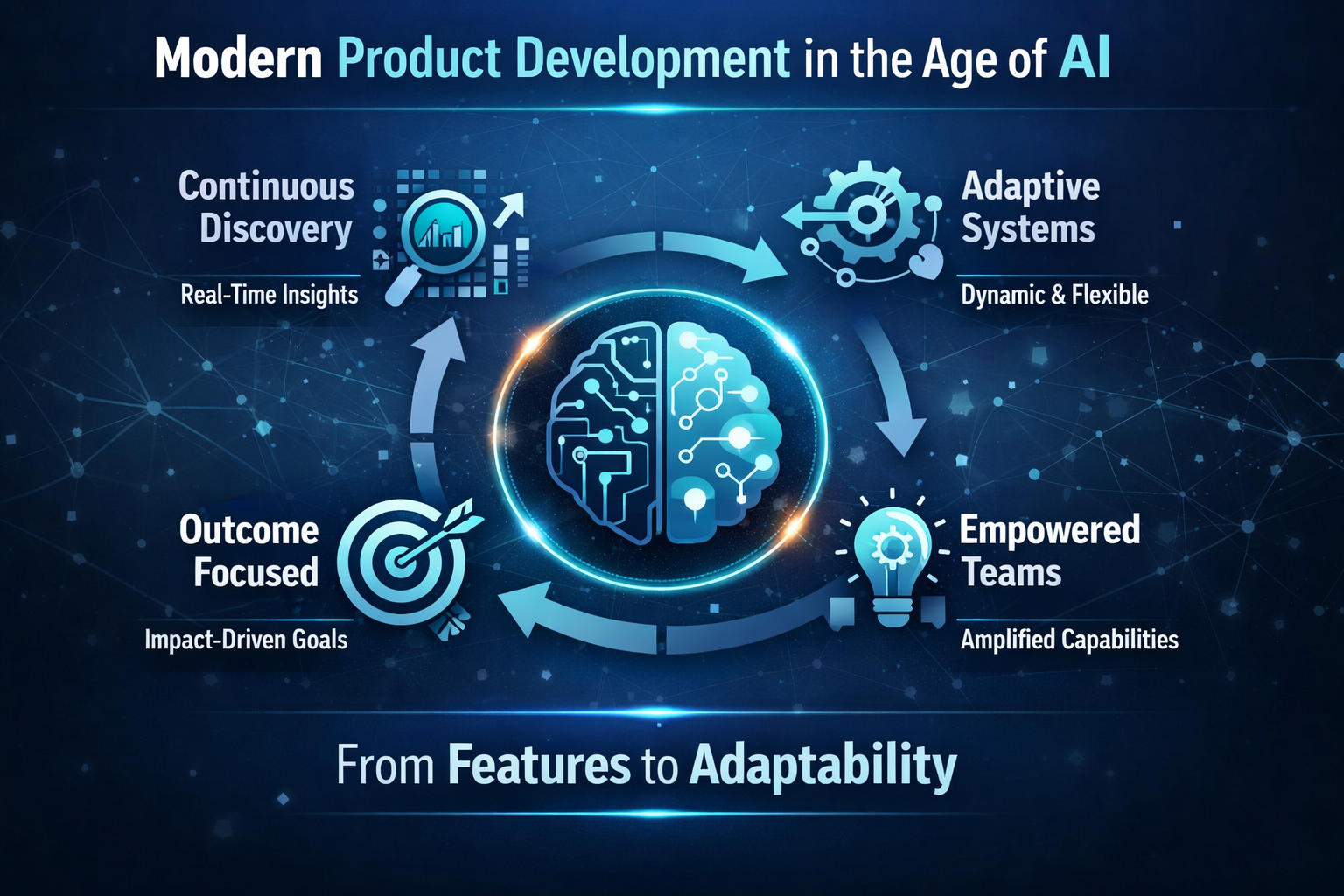
Traditional product development assumes that requirements can be defined upfront and implemented through carefully planned releases. In reality, user needs, integrations, and operating environments change continuously.
AI accelerates this shift. Instead of treating software as a fixed set of features, products increasingly behave like living systems—learning from data, adapting to usage, and evolving without constant rewrites.
The most important shift is conceptual. Instead of asking “what feature should we build next?”, modern teams ask “what outcome are we optimizing, and how can the system adapt?”.
AI does not replace product thinking—it sharpens it. Products built with adaptability in mind are easier to evolve, integrate, and scale as conditions change.